Ця публікація також доступна такими мовами:
 Українська (Ukrainian)
Forming Ukraine's Policy on Occupied Territories: Key Challenges
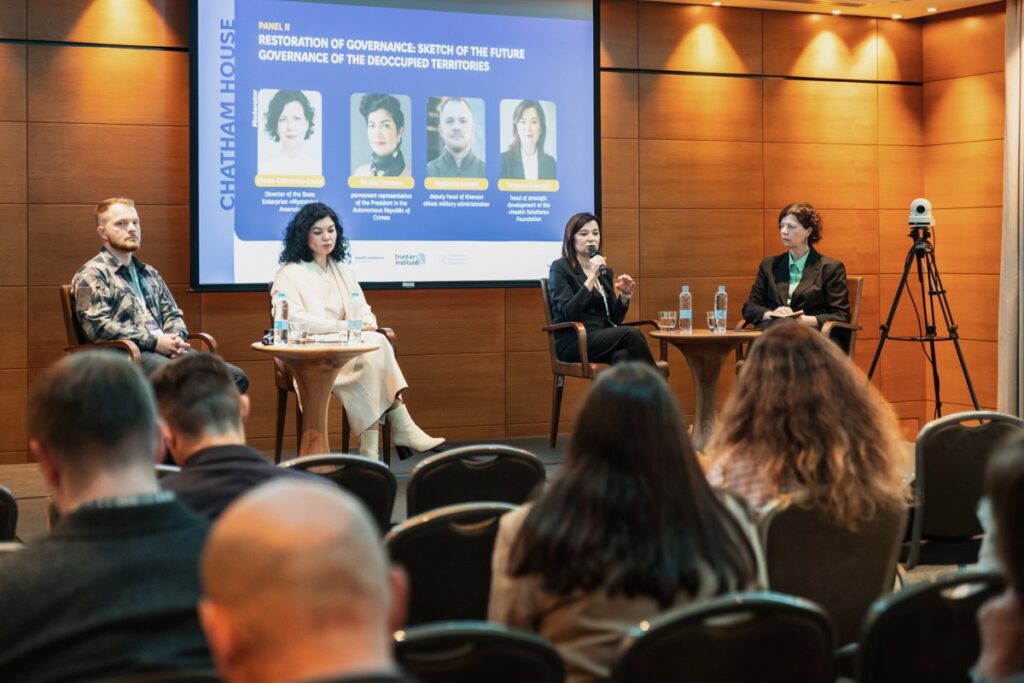
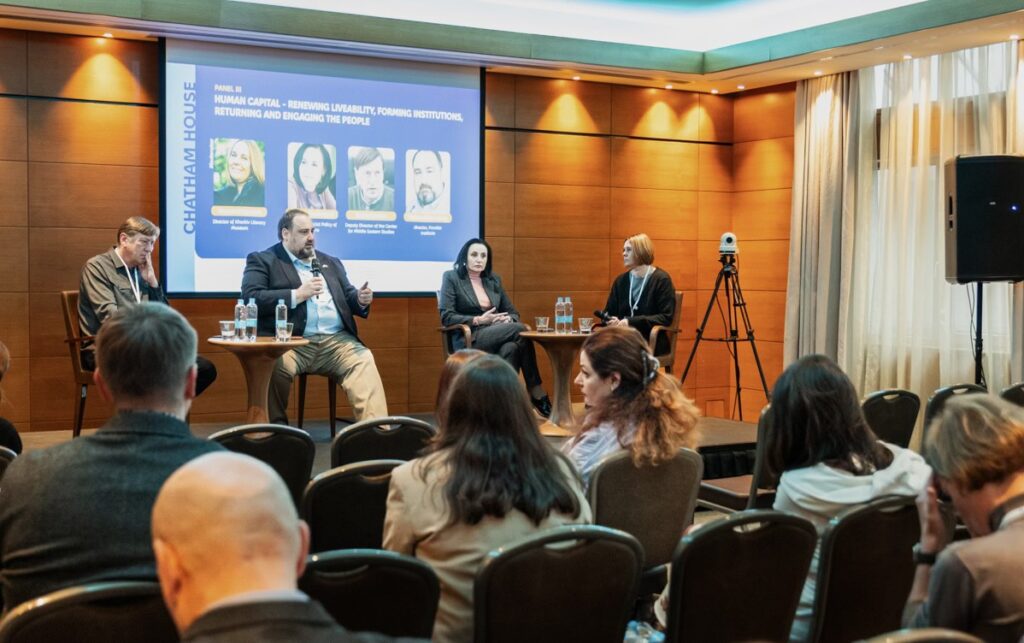
Friends, we invite you to familiarize yourself with the discursive protocol following the conference on the topic: “Forming Ukraine's Policy on Occupied Territories.”
The conference was organized by the "Health Solutions" Charitable Foundation in partnership with the International Renaissance Foundation and the Frontier Institute. Leading experts, government officials, and public figures participated in the discussions. The event featured four discussion panels where we invited participants to address a number of critically important issues concerning the development of Ukrainian statehood.
How can Ukraine maintain its subjectivity while its territories remain occupied? Why do Western partners suggest leaving the territories under occupation?
— Under the current circumstances, we hear more about negotiations and less about the 1991 borders. It seems that we are redefining victory. It is important to emphasize that the internationally recognized 1991 borders and the restoration of territorial integrity are and will remain our priority. Illegal occupation should not undermine our right to subjectivity. Occupation results from a violation of our security. Therefore, we should view the return of territories not just as a matter of victory but primarily as a matter of restoring international law.
— Ukraine has yet to fully address the issue of occupation on the international stage. While trying to explain that occupation is not peace, we have failed to make this statement clear and tangible. Many people, even with the best intentions, believe that war is so horrific that occupation might be a better alternative (as it supposedly reduces human suffering). We have not conveyed that occupation does not reduce human suffering; it merely makes it invisible. Occupation is not just about changing one flag for another. It means rape, abductions, destruction of identity, deportation, and forced adoption of our children by Russians. It involves filtration camps and mass graves. This is what we failed to communicate.
What should governance look like in currently and future de-occupied territories?
— The re-establishment of the healthcare system in de-occupied territories was one of the first government requests for the development of a systematic policy in a specific area of public administration. Healthcare has become a kind of trigger for considering the problem of de-occupation and reintegration in a more comprehensive way than just through the lens of medicine. This is primarily because healthcare affects every person at every stage of life. The first thing Russia does when occupying territories and establishing its governance is to take control of education and healthcare. The occupiers restore a system familiar to them: reopening clinics, returning to paper records, and flooding medical staff with money.
— A serious question arises as to whether full-fledged public governance has been restored in the currently de-occupied territories. It appears that we are still waiting for perfect security conditions to be established. In the communities of de-occupied Kharkiv region, residents do not receive full medical assistance or educational services for children. Instead, compromise solutions are being offered that do not meet all needs. We need to seek unconventional approaches, as decisions regarding de-occupied territories will inevitably require changes in policies within Ukraine.
What standards should we set in infrastructure development to avoid replicating the past?
— Ukraine faces the crucial task of modernizing its approaches to energy production and use. Research in Kyiv region has shown that many local communities are focused on solving current problems but are not ready to think strategically and implement innovative approaches. The reconstruction process must include rethinking opportunities for business collaboration and introducing new models based on modern technologies and effective financial mechanisms.
— The strategy for restoring energy infrastructure should be based on the use of mobile gas-piston and gas-turbine units, as well as solar power stations. However, the implementation of such projects requires significant investment, which can primarily be provided by private businesses. The state must create favorable conditions for business involvement, particularly by ensuring transparent regulations that allow electricity to be sold at market prices. Social support should be directed exclusively at the most vulnerable groups, enabling the efficient use of resources.