Ця публікація також доступна такими мовами:
 Українська (Ukrainian)
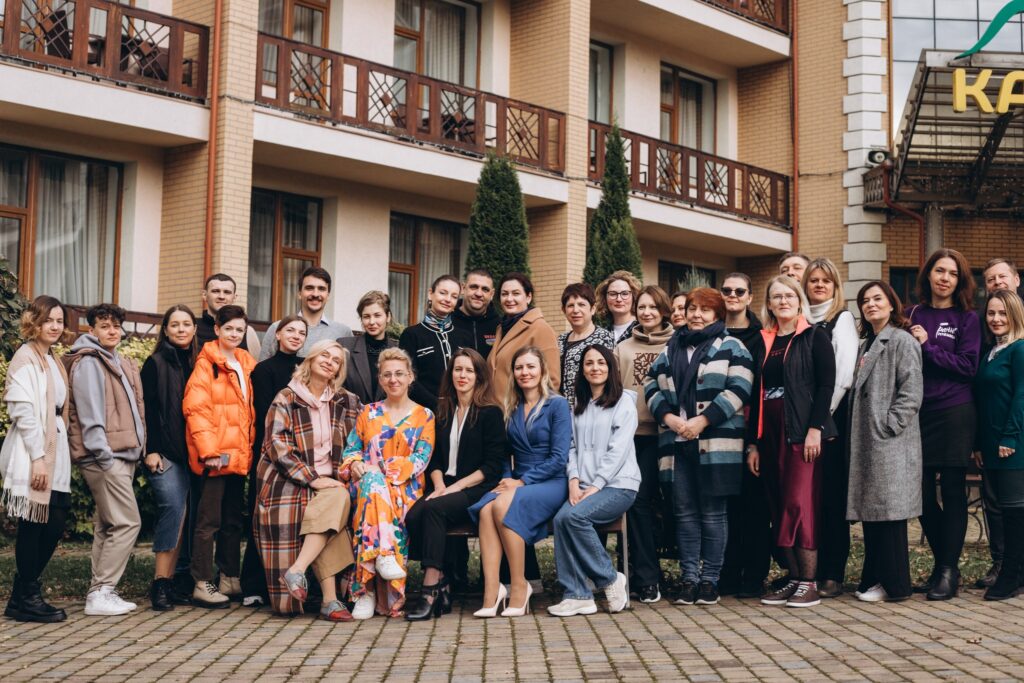
On October 19, the Health Solutions Foundation participated in a discussion with the Patients of Ukraine charity regarding the draft law on “Self-Governance in Healthcare in Ukraine.”
Co-founders of Health Solutions, Tetiana Havrysh and Viktoria Tymoshevska, raised several important questions during the meeting:
- What do we know about this draft law, and what are its advantages and disadvantages?
- What unites doctors and patients?
- How can we achieve a dialogue based on equality?
Advantages of the Draft Law:
- Empowerment of Doctors: The draft law grants doctors the right to independently address issues related to medical practice. Currently, there are over 200 medical associations in Ukraine, but they cannot replace medical self-governance, as there is no strong demand for community cohesion or leadership to promote the doctor’s subjectivity.
- Transparency and Autonomy: The law aims to establish an independent professional community with transparent rules.
- Impact on Standards: Doctors will have a say in the standards of medical service provision. As Tetiana Havrysh noted, “Quality control and ethics are achievable not through hierarchy, but by creating effective balanced systems and engaging communities.”
Disadvantages:
- Lack of Real Autonomy: The draft law does not provide doctors with economic, contractual, or professional freedom, making it impossible for unfree doctors to establish self-governance, which is a hallmark of free professions.
- Paternalistic Interaction Model: The healthcare sector still operates under a paternalistic model of interaction between doctors and patients. We need to improve the cultural level of these relationships, though there have been more cases recently of doctors and patients working in tandem, as highlighted by Marina Khalymonenko from Patients of Ukraine.
- Division of Healthcare Professionals: The draft law separates family doctors from specialists, reflecting a Soviet-era doctrine while contradicting international practices.
- Non-Transparent Decision-Making: The election process for governing bodies and decision-making lacks transparency, leading to potential corruption and power usurpation by elites.
- Community Division: The medical community remains divided, with a strong vertical hierarchy inherited from the Soviet system. The draft law lacks mechanisms to dismantle this hierarchy and the absolute power of chief physicians.
- Medical Errors Unregulated: Ukrainian legislation does not define medical errors, and any actions that could be deemed erroneous are overly criminalized. This is a carryover from Soviet times. Medical self-governance should establish an anonymized database of medical errors for training and development purposes.
- Neglect of Patient Interests: The draft law fails to incorporate patient interests, which is contrary to international practices where non-doctors are included in ethical committees and medical arbitrations. Ukrainian patients are almost defenseless under current legislation. Changing the regulation of doctor status and involving patients in establishing medical self-governance can help balance power dynamics.
From 2020 to September 2023, the Ukrainian Prosecutor General’s Office opened 1,888 criminal cases based on patient complaints regarding inadequate medical care, with only 6 resulting in a conviction. The average compensation for patients ranges from 2,000 to 80,000 UAH, whereas in Poland, this amount is nearly equivalent to 900,000 UAH.
What We Can Do:
- Advocate for legislative changes to improve the medical system.
- Create conditions for engaging the medical community and the public in forming self-governing institutions.
- Conduct advocacy and communication campaigns to raise awareness about the importance of medical self-governance for patients and society as a whole. As Andriy Maranov, a surgeon and founder of the startup Just Save Life, states, “Change is made by small groups of people. We can reform regardless of doctors.”
We believe that together with the Patients of Ukraine foundation and other stakeholders, we can make the healthcare system patient-centered and effective. Join the dialogue and contribute to our collective efforts!