Ця публікація також доступна такими мовами:
 Українська (Ukrainian)
Ahead of the implementation of projects under the “Mini-Grants for a Healthy Community” competition, we spoke with Yevhen Yatsura, a doctor at the Family Medicine Center 1 in Kramatorsk, who will oversee the project “Identification and Training of Individuals at Cardiovascular and Diabetes Risk.”
For over a year, we have been collaborating with the Kramatorsk community to improve public health and redefine our approach to health categories. One of our key focuses is strategic planning for what the community will look like in 5-10 years and what resources need to be mobilized now to preserve and restore human capital.
“In Kramatorsk, we can’t even make predictions for a week in advance, but the city continues to live and develop. Municipal enterprises are functioning, and people need our assistance,” said Yevhen Yatsura, Family Medicine Center 1 doctor.
The project will consist of several phases:
Phase One
“Check-up at the Workplace” – a team of doctors and nurses will visit municipal enterprises to conduct initial medical examinations for employees. During the check-up, height, weight, waist circumference will be measured, body mass index calculated, and glucose and blood pressure levels will be taken.
“The Family Medicine Center operates from 8:00 AM to 4:00 PM, just like the municipal enterprises. Therefore, even if an employee wants to come for an examination, they often don’t have the time. There’s a shortage of staff at all enterprises, and few workers take unpaid leave for a medical check-up. Based on our experience, maybe ten percent of people do this. Mandatory health checks are no longer conducted because they require secondary care doctors, and we do not have enough of them. If all municipal enterprises start doing health checks, there won’t be enough time for doctors to attend to patients with illnesses,” explained Yevhen Yatsura.
Phase Two
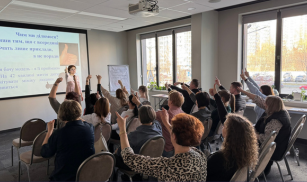
This phase begins after the check-up events at the enterprises. Groups of individuals at risk will be formed to participate in the “Health School,” aimed at preventing diabetes and hypertension. Lecture materials and handouts will be developed for the “Health School.”
“Many people now have blood pressure monitors, but very few know how to use them correctly: cuffs come in different sizes, and people don’t know how to sit properly or what to do before measuring blood pressure,” said Yevhen.
Many workers at municipal enterprises lead sedentary lifestyles and do not follow proper nutrition guidelines. The project aims to engage and educate individuals to become more conscious about their health.
Yevhen shared his expectations regarding the results of the check-up. Since 2022, he has noticed a trend in the clinic where one in three patients has elevated blood sugar and pressure due to stress.
“Considering that the average age of workers at the enterprises is over 30, we expect that 50 percent will show potential health risks and will be referred to the ‘Health School.’ Additionally, we anticipate that 10-15 percent will be diagnosed with diabetes or hypertension, and these individuals will be immediately directed to a family doctor for further management of their condition,” Yevhen Yatsura concluded.