Ця публікація також доступна такими мовами:
 Українська (Ukrainian)
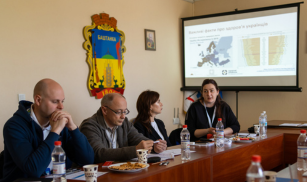
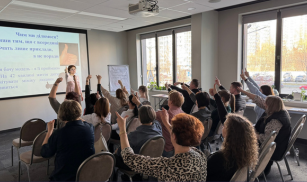
Together with the Kharkiv Expert Group on Health Reform, we continue meeting with communities participating in the "Healthy Community" project, supported by ULEAD with Europe.
We refer to the "Integrator" as the working group that will collect and process relevant data on the health of the community’s residents, and based on this, will form proposals and targeted health management programs for the local government.
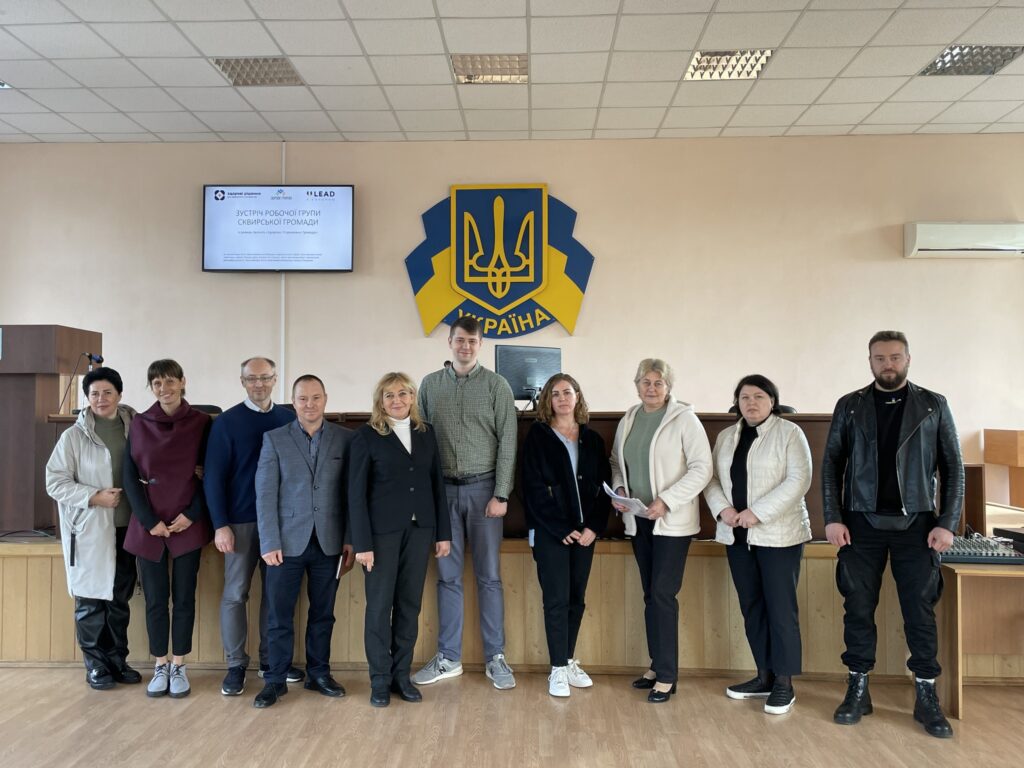
The integrator group includes not only healthcare workers but also activists, business representatives, and local authorities – in other words, all those interested in improving the quality of life in the community.
The health of the population is the success of the community as a whole, so it must be developed and improved. But to begin with, it is essential to understand where to move and identify the current problems.
In Skvyra, there is a high level of diabetes, which leads to other diseases and health conditions. At the same time, people rarely get examined, and they usually seek help only when it's too late, or they self-medicate. First and foremost, we need a mechanism to encourage people to undergo regular screenings. For this, we need to analyze the situation, collect data, and learn from the experience of other communities, says Yaroslav Pospelov, a representative of the Skvyra City Council.
The experience of others is indeed important. Therefore, colleagues from Bucha, who are also implementing the "integrator" model together with our experts, joined the meeting with the working group in Skvyra.
A feature of Skvyra is that healthcare providers here include not only hospitals but also individual entrepreneurs (FOPs). In the community, there are 9 contracts for medical services under the medical guarantee program (in primary care), and three of these are with FOPs. More details can be found on the NSZU dashboards. Thanks to this, we will be able to see how the "integrator" works even in situations where it is necessary to establish cooperation not only between various representatives of local government but also with private business.
During the first meeting and after hearing the experience from Bucha, we realized that for the working group to function properly, representatives from health management, the education department, the pension fund, the economic department, and business must be involved. Only in this way will the working group be cohesive, shares Yaroslav Pospelov.
This publication was prepared with the support of the European Union and its member states: Germany, Sweden, Poland, Denmark, Estonia, and Slovenia. The content of this publication is the sole responsibility of its authors and does not necessarily reflect the position of the "U-LEAD with Europe" Program, the European Union, or its member states.