Ця публікація також доступна такими мовами:
 Українська (Ukrainian)
A major strategic goal of the Health Solutions Foundation is to redefine the concept of "health" through the lenses of culture, well-being, and community development. We believe that health is not just the absence of illness, but rather the highest possible level of human potential fulfillment.
The core element for these changes is the shift toward health management using objective data. When we define health as a social category, the calculation and measurement of community health extends beyond the walls of hospitals, and other community stakeholders become involved in data collection and processing.
Reliable data needed for decision-making in communities is still lacking, says our expert on community health, Mykhailo Dovhopol.
Key Questions for Community Health Data Collection
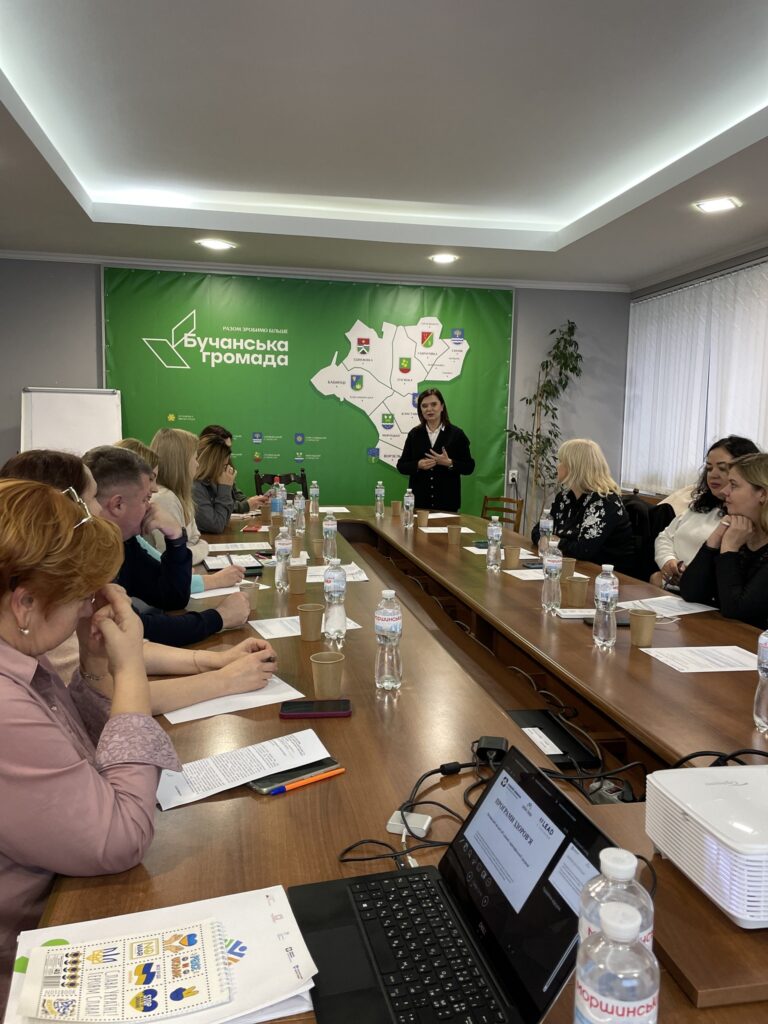
During a meeting with the working group of Bucha Community, which participates in our "Healthy and Capable Community" project supported by ULEAD with Europe, we discussed the following:
- How and where should we collect data?
- What data do we need?
- What do these data offer us for a comprehensive understanding of the health of residents?
- How do we measure outcomes, and how can the experience of Kinzigtal, Germany, help us in this regard?
Expanding the Scope Beyond Medicine
At these meetings, we emphasize that we are not just discussing healthcare. This is essential because the data we are teaching the working groups to collect in communities not only concerns the physical health of patients but also the economy, social context, habits, and lifestyle.
These are the factors that will shape our approach to understanding and managing health in our communities.
Oksana Dzham, Director of the Bucha Primary Healthcare Center
Challenges in Adapting the Kinzigtal Experience to Ukraine
When discussing the implementation of the Kinzigtal experience in our communities, we must account for the particularities of Ukrainian society and the healthcare system. In Kinzigtal, the healthy community model operates using anonymized patient data collected from birth, which is accessible and shared across the network. However, in Ukraine, such a system is not yet in place—data from private clinics do not reflect in public healthcare facilities and vice versa.
For this reason, our Foundation, together with the National Health Service of Ukraine (NHSU) and the five participating communities, has set the goal of developing a health data measurement system—a dashboard that will be implemented based on the experiences of these communities and eventually spread across the country.
“What we are doing here is a laboratory for the entire country,” said Tetyana Gavrysh, co-founder of Health Solutions at the meeting in Bucha.
A Symbolic Moment for Bucha
It is symbolic that this conversation is taking place for the first time in Bucha. After the liberation of the town, the remaining residents were counted by the lights in their windows. A similar situation exists within our healthcare system—our understanding of the population’s health is at a similar level to how the population of Bucha was initially counted after de-occupation.
Moving Forward with Health Data and System Transition
The transition to a new system of working with data and measuring health is a long and complex process. But our Foundation is ready to work together with the state, local authorities, medical managers, and the public to make this shift a reality.